
September 12, 2026
Hard Water Stains in Wenatchee Valley Homes
By Wenatchee Home Cleaning
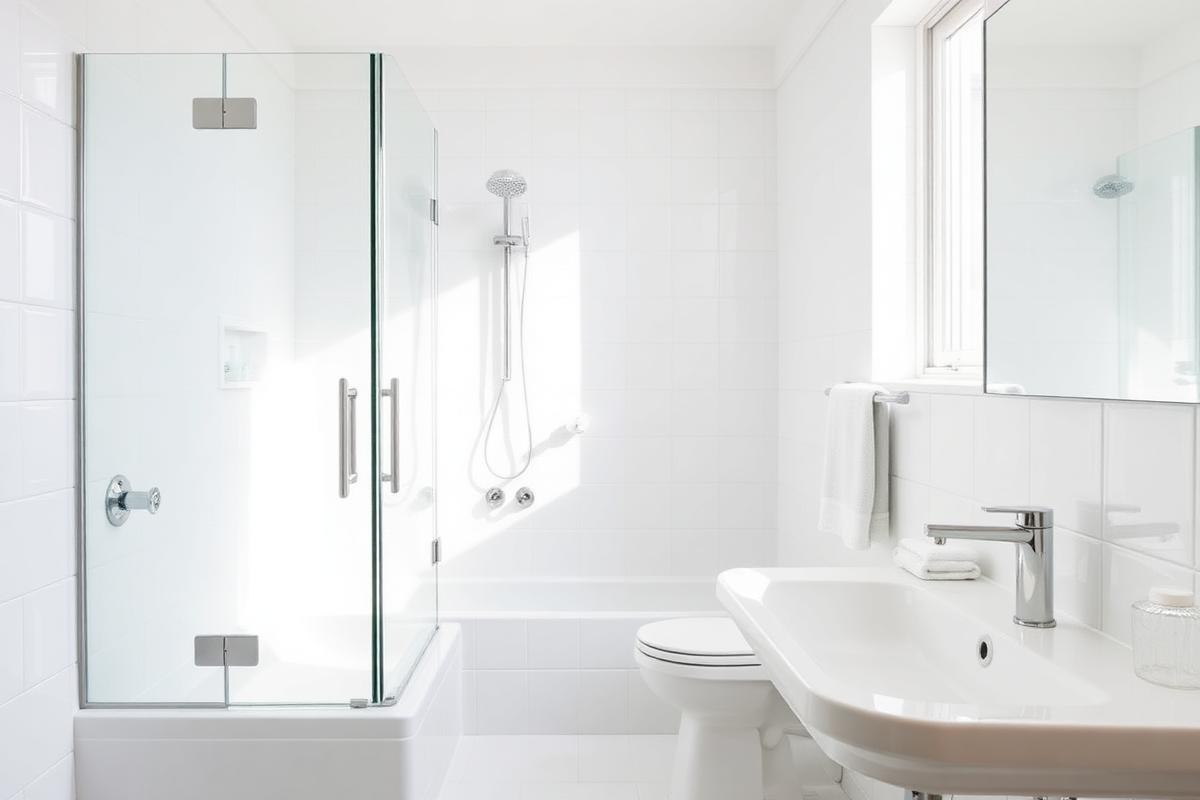
If you have lived in Wenatchee, East Wenatchee, Cashmere or Chelan for any length of time, you know the look. Shower glass that will not come clear. A chalky ring at the base of the faucet. White spots on the dishwasher, the sink and the kettle that reappear the day after you clean them. That is hard water, and in this valley it is not a maintenance failure, it is a fact of the water supply.
What hard water actually is
Hard water is water carrying dissolved minerals, mostly calcium and magnesium, picked up as it moves through rock and soil. Our supply comes off the Cascades and through the Columbia basin, and it arrives mineral rich. There is nothing unhealthy about it. The problem is what happens when it evaporates.
When a droplet dries on glass, tile or chrome, the water leaves and the minerals stay. One droplet is invisible. A shower used daily for a month leaves thousands of them in the same places, and they bond into a layer called scale. Scale is not dirt sitting on the surface. It is a mineral deposit chemically attached to it, which is why a general purpose spray and a cloth do nothing but move it around.
Why it looks worse here than elsewhere
Two local conditions accelerate it. First, our humidity is low for most of the year. Water evaporates fast, which means droplets dry in place rather than running off, and every evaporation event leaves a deposit. Second, summer heat drives it further. A south facing bathroom in August dries a shower wall within minutes of the water shutting off.
Add the fine dust that hangs in valley air through late summer and the deposit becomes a mixed film of mineral and grit. That combination is what makes shower glass look permanently fogged even after a scrub.
Where it shows up first
- Shower doors and glass panels, especially the lower third
- Faucet bases, aerators and the joint where the fixture meets the counter
- Showerheads, which clog and spray unevenly as scale builds inside them
- Sink basins and the area around the drain
- Toilet bowls at the water line
- Dishwasher interiors and glassware
- Tile grout, where the deposit is absorbed rather than sitting on top
How to slow it down between cleanings
You cannot stop hard water without treating the water itself, but you can dramatically slow the rate of buildup with small habits. All of these come down to the same principle: do not let water dry in place.
- Keep a squeegee in the shower and run it down the glass after each use. This single habit does more than any product
- Dry the faucet and sink rim with a towel after you brush your teeth or wash dishes
- Run the bathroom fan during and for fifteen minutes after a shower to speed drying and cut humidity swings
- Wipe the shower walls with a microfiber cloth once a week, before deposits bond
- Soak the showerhead in white vinegar for an hour every few months, then rinse and run hot water through it
- Use a rinse aid in the dishwasher and run it on the hot cycle
- Fix drips quickly. A slow drip leaves a deposit in exactly the same spot thousands of times
One caution. Vinegar and other mild acids work well on glass, chrome and stainless, but they can etch natural stone. If you have marble, travertine or a honed granite counter, keep acidic cleaners off it entirely and use a stone-safe product instead.
When buildup needs professional attention
There is a point where home remedies stop making progress. You will know it when the glass has a permanent haze that does not change after cleaning, when you can feel a rough texture with a fingertip, when grout has turned a different color than it started, or when the showerhead sprays sideways. At that stage the deposit is thick and layered, and removing it takes the right product, real dwell time and mechanical work with non-scratch pads.
This is detail work rather than routine work, which is why it lives in a deep clean rather than a maintenance visit. Done properly, it takes the surface back to its actual finish, and from there a weekly wipe and a squeegee can hold it. Left alone, scale keeps layering, and on glass it eventually etches the surface permanently, at which point no amount of cleaning brings it back and the panel has to be replaced.
The realistic plan for a valley home
Reset the buildup once with a thorough deep clean, adopt the squeegee habit, and let regular visits keep the fixtures from re-scaling. Most homes here do well with a full descaling reset once or twice a year and steady attention in between. That is far less work than fighting a slow loss every week and never quite winning.
If your shower glass has stopped responding to anything you try, tell us the bathroom count and roughly how long the buildup has been there, and we will send a free quote to reset it.
Related service: Deep Cleaning
Frequently asked questions
Why does my shower glass look cloudy even after I clean it?
Because the haze is mineral scale bonded to the glass, not dirt on top of it. General cleaners cannot dissolve it. It takes an acidic descaling product, dwell time and non-scratch mechanical work to remove.
Can hard water permanently damage fixtures and glass?
Yes, if it is left long enough. Scale eventually etches glass and pits chrome finishes, and at that point the damage is in the surface itself. Removing buildup before it layers is what prevents permanent marks.
Will a water softener solve the problem?
A softener treats the cause and greatly reduces new buildup throughout the home. It does not remove scale that is already there, so most homes still need one thorough descaling clean after installation.
Ready for a free quote?
Tell us about your home and we'll send a free, no-pressure quote. Call or text, whichever is easier.